
Price the finished home first, not the discount. Add a verified repair scope, permits, insurance, financing, and the months you'll carry the property, then compare that total to a sound comparable. If the gap is thin once a contingency reserve is in, the fixer-upper isn't a bargain.
Is a Fixer-Upper Orange County Worth It After All Costs?
Whether a fixer-upper is Orange County worth the effort comes down to one comparison: your purchase price plus verified repairs, permits, insurance, financing, and carrying costs, against what a comparable home in sound condition sells for. If the gap is thin, the discount is an illusion. I run that math with my clients before we write an offer, because the asking price is the smallest part of the answer.
Key Takeaways
Median sale prices for homes sold in the trailing 90 days through November 2026 run from $980,000 in Aliso Viejo to $3,300,000 in Laguna Beach, so a fixer-upper's discount has to be measured against sound comparables in its own city.
Inspection findings should be sorted into four buckets (health and safety, water and structure, major systems, cosmetic) because the first three can change the project's scope and the fourth usually can't.
Get at least two independent written renovation scopes, since a low early bid often leaves out what shows up once walls, floors, or ceilings are opened.
Get written confirmation that the home can be insured in its current condition before you remove contingencies, because a roof near the end of its life or a vacant, water-damaged house can limit coverage.
Keep a separate contingency reserve and plan for carrying time, not just construction time, because permit delays and rework stretch the period before you can move in or refinance.
How Do You Know a Fixer-Upper Is Orange County Worth Buying?
Compare your total all-in cost to the value of a similar home in sound condition, and only proceed if the gap leaves real room for surprises. That's my Orange County worth test, and it applies whether you're in Mission Viejo, Costa Mesa, or Dana Point.
What belongs in the total cost?
The total is the purchase price plus everything it takes to make the home sound, insurable, and livable. Here's the list I build with buyers:
Verified renovation scope: demolition, design and engineering, labor, materials, disposal, temporary protection, utility work, and finish work.
Permits and plan review: fees and the time they take, which vary by city and by project.
Financing costs: interest, any renovation-loan requirements, and reserves your lender may ask for.
Insurance during construction: coverage terms can differ for vacant or partially occupied homes.
Carrying costs: property taxes, utilities, and possibly rent elsewhere while work is underway.
A contingency reserve: kept separate, not folded into the repair budget.
I won't put a dollar figure on your project here. Your number depends on the home's condition, the city, and the scope, and that's exactly what a walkthrough and written contractor bids are for.
What does the local market say about the comparison side?
Recent local market data shows how different the sound-condition benchmark is from one city to the next. These are area-level medians for homes sold in the trailing 90 days as of November 2026. An individual home's value depends on condition, street, build year, and timing, so treat them as context only.
Orange County Home Price Comparison - November 2026
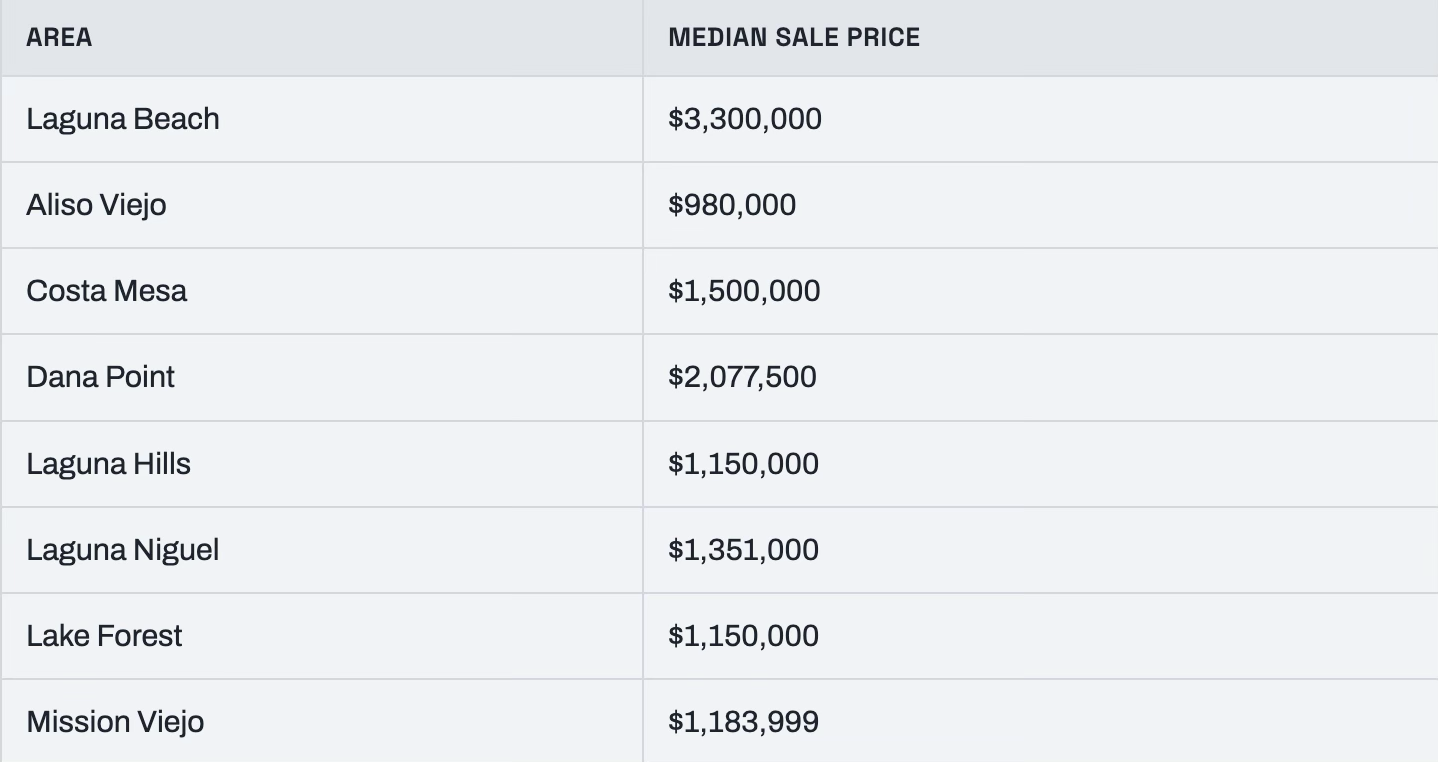
Source: aggregated public listing data, trailing 90 days, as of November 2026.
For the wider Laguna Beach market, recent local market data shows 145 homes for sale now and 79 homes sold in the last 90 days. Inventory like that gives you room to compare, so you don't have to talk yourself into a project whose math is thin. If you want a read on what a sound version of a specific home would sell for, that's a comparable analysis I can run for you.
My related post on why you shouldn't max out your budget matters even more with a fixer-upper, since the purchase price is only the first check you write.
What Should the Inspection Tell You Before You Commit?
It should turn visible defects into written scopes that contractors can price consistently, and it should show whether any problem is big enough to end the deal. Treat the inspection period as a staged investigation, not a single appointment.
How do you sort what the inspector finds?
I have buyers sort every finding into four buckets:
Health and safety: unsafe electrical conditions, active leaks, nonfunctioning heating.
Water intrusion and structural concerns: roof leaks, foundation movement, drainage problems.
Major systems: roof, electrical service, plumbing supply and sewer, heating and cooling, windows.
Cosmetic work: kitchens, bathrooms, flooring, paint, layout.
Cosmetic work can usually be phased over time. Concealed water or structural problems can expand quickly once construction begins, so they get priced first. For more on spotting the red flags, I covered five major warning signs that separate a dream home from a money pit.
When do you need a specialist?
Whenever the general inspector flags something they can't fully evaluate. A visual inspection is not a substitute for a specialist when a defect is suspected. Depending on the property, that can mean a sewer lateral inspection, a roofer, a structural or foundation engineer, an electrician, an HVAC technician, a mold or moisture evaluation, or a geological and drainage review. Hillside, coastal, and older central Orange County homes can each raise different questions, so the right specialists depend on the property, not a generic checklist.
Big-ticket systems deserve extra attention. An aging HVAC system or a roof near the end of its life is both a real cost and some of the strongest negotiating leverage you'll have, so get those evaluated before you talk price.
Why do permits and unpermitted work matter?
Because they can change what you'll owe in time and money after you close. Before you rely on any contractor's scope, identify who controls permitting for the property. Inside an incorporated city, that city's building department handles most residential permitting decisions. Unincorporated areas fall under county permitting through OC Development Services, whose permit FAQs also note a minimum filing fee. That fee is only a starting point, since plan review, inspections, engineering, and city-specific charges can add to it. A homeowners association can add its own approval requirements.
Ask whether prior work on the home was permitted. I explain what's at stake in the risks of buying a home with unpermitted renovation work.
Why get two renovation scopes?
Because a single bid is a guess. Ask for at least two independent scopes that each itemize demolition, design and engineering, permits, labor, materials, disposal, temporary protection, inspections, utility work, and finish work. A low preliminary number may leave out items that only appear once walls, floors, or ceilings are opened. That's where fixer-upper budgets quietly fall apart.
Can You Finance and Insure a House That Needs Major Work?
Often yes, but you need to confirm both before you remove contingencies, because a conventional loan or a standard insurance policy may not fit a home in rough condition.
How does financing work for a home that needs repairs?
Ask lenders about renovation-loan products and how they handle contractor requirements, draw schedules, reserve requirements, and appraisal treatment. Also ask whether the home has to be habitable at closing. If you're using a VA loan, ask your lender early how the property's condition affects eligibility, because that can shape which homes are realistic. I spent years in mortgage lending before real estate, and the buyers who run into trouble are almost always the ones who found out about a lender's condition requirements after they were already under contract.
Will you be able to insure it?
Don't assume it's routine. Before you waive contingencies, get written confirmation that the property can be insured in its current condition. Then ask how vacancy, construction, partial occupancy, water damage, wildfire exposure, or an older roof changes eligibility or coverage. The California FAIR Plan is a last-resort market mechanism, not a substitute for comparing your options, and the California Department of Insurance has published 2026 regulatory materials on FAIR Plan inspections and placement procedures. Underwriting rules can change, so ask for current terms on your specific property.
How long will you carry the property?
Longer than the contractor's construction schedule. Plan for delayed permits, plan revisions, inspection rework, material lead times, contractor scheduling gaps, and temporary utility interruptions. Each one stretches the period before you can occupy or refinance, and every month adds taxes, utilities, and interest. Keep a contingency reserve that's separate from the repair budget rather than assigning every available dollar to the initial scope.
A fixer-upper stays Orange County worth buying when the numbers hold up after those delays are included. If it only works when everything goes perfectly, I'd pass. My post on questions to answer before you buy a fixer-upper is a good companion to this one.
FAQ
Is buying a fixer-upper in Orange County cheaper than buying a move-in-ready home?
Not automatically. The asking price is lower, but repairs, permits, insurance, financing, and carrying time can erase the discount. It's cheaper only if your total all-in cost lands meaningfully below a comparable home in sound condition in the same city.
How much should I budget for renovating an older Orange County house?
It depends on the home's condition, the city, and your scope, so I don't give a one-size number. Get at least two independent written scopes, add permit and plan-review requirements, and keep a separate contingency reserve. I can help you line that up before you make an offer.
What defects should make me walk away from a fixer-upper?
Active water intrusion, structural movement, a failed sewer line, unsafe electrical conditions, and a roof or system you can't get priced all deserve serious pause. Walk away if the total cost, including a contingency reserve, no longer leaves room against a sound comparable. Unpermitted work that can't be resolved is another common deal-breaker.
Can I get a mortgage for a house that needs major repairs in California?
Possibly, but a conventional loan may not accommodate the property's condition. Ask lenders about renovation-loan products, contractor requirements, draw schedules, reserve requirements, and whether the home must be habitable at closing. Confirm all of this before you make your offer, not after.
Will homeowners insurance cover an Orange County fixer-upper during renovation?
It depends on the property and the insurer. Vacancy, construction, water damage, wildfire exposure, or an aging roof can change eligibility or coverage terms. Get written confirmation that the home can be insured in its current condition, and ask about renovation-period coverage, before you waive contingencies.
Ready to Run the Numbers on a Specific Home?
A fixer-upper is worth it only when the total cost, carrying time, and contingency still beat a sound comparable. I'll help you sort the inspection findings, line up the right specialists, and pressure-test the numbers before you commit. When you're ready, search coastal listings or request a free home valuation and we'll walk through the property together.
About Ron Pickett
Ronald “Ron” Pickett is an Orange County luxury Realtor and Dana Point and coastal property expert, verified in the top 1.5% nationwide by RealTrends (2023, 2025 and 2026). A retired firefighter and nine-year U.S. Marine Corps veteran who served at MCAS El Toro, he built a mobile notary business in 1996, worked in mortgage lending starting in 2003, and has invested in Newport Beach-area properties. He has lived in Orange County since 1993 and now calls Dana Point home.
Coldwell Banker Realty · (949) 246-8500
Equal Housing Opportunity. Ron Pickett, CA DRE # 01379585; Coldwell Banker Realty, CA DRE # 00616212. Regulated by the California Department of Real Estate. This article is general information, not legal, tax, or financial advice; confirm your own numbers with your escrow officer, tax advisor, or lender.